
giovedì 22 agosto 2013
Corey Taylor presents Top 10 Ghost Movies
Corey Taylor shares his top ten ghost movies with Nerdist. Here's the video:

mercoledì 21 agosto 2013
Slipknot/Stone Sour singer Corey Taylor recalls first paranormal experience, talks future books
Slipknot / Stone Sour singer Corey Taylor recently released his second book, ‘A Funny Thing Happened on the Way To Heaven,’ which offers a glimpse inside his paranormal experiences.
Taylor recently stopped by the Loudwire studio for an in-depth interview about the book and his music, and in the video segment above, he discusses his first paranormal experience, which occurred when “all hell broke loose” during an incident when he was about 10 years old.

Taylor recently stopped by the Loudwire studio for an in-depth interview about the book and his music, and in the video segment above, he discusses his first paranormal experience, which occurred when “all hell broke loose” during an incident when he was about 10 years old.
He also discusses whether he’ll continue to write books from the unique perspectives of his first two releases – ‘Seven Deadly Sins’ and ‘A Funny Thing Happened on the Way to Heaven.’
Check out Corey Taylor talking about his new book in the video segment above, and stay tuned for more from our interview, in which Taylor discusses the latest on Stone Sour and Slipknot. In the meantime, you can pick up ‘A Funny Thing Happened on the Way to Heaven’ at Amazon.
Check out Corey Taylor talking about his new book in the video segment above, and stay tuned for more from our interview, in which Taylor discusses the latest on Stone Sour and Slipknot. In the meantime, you can pick up ‘A Funny Thing Happened on the Way to Heaven’ at Amazon.

Joey Jordison vs. George Kollias. Vote here
from Loudwire:
Slipknot drummer Joey Jordison‘s influences are from the bowels of the underground and his stickwork is far beyond your standard metal group. Constantly adding little flourishes to his playing, the drummer gives Slipknot the edge that pushed them ahead of their contemporaries. Jordison’s executes a large amount of fills that make Slipknot’s music anything but stagnant. As Slipknot fans await a new album, the multitalented drummer is at it again with his brand new band Scar the Martyr.
George Kollias may have the toughest job in all of metal. Nile are known for their lengthy songs, usually dominated by some of the fastest blast beats ever committed to record. Karl Sanders even confessed that former Nile drummers could not keep up with the physical demands of touring with the band after so many years. Kollias has been at it for nine years now with Nile. The band recently performed a tour of double sets, where the Greek drummer showed no signs of tiring. Is he human?
Joey Jordison or George Kollias? Cast your vote for the Greatest Metal Drummer in the poll below! Voting for this round closes on Sunday, Aug. 25 at 11:59PM ET. Fans can vote once per hour, so keep coming back to make sure that your favorite metal musician wins!
Vote here

Slipknot drummer Joey Jordison‘s influences are from the bowels of the underground and his stickwork is far beyond your standard metal group. Constantly adding little flourishes to his playing, the drummer gives Slipknot the edge that pushed them ahead of their contemporaries. Jordison’s executes a large amount of fills that make Slipknot’s music anything but stagnant. As Slipknot fans await a new album, the multitalented drummer is at it again with his brand new band Scar the Martyr.
George Kollias may have the toughest job in all of metal. Nile are known for their lengthy songs, usually dominated by some of the fastest blast beats ever committed to record. Karl Sanders even confessed that former Nile drummers could not keep up with the physical demands of touring with the band after so many years. Kollias has been at it for nine years now with Nile. The band recently performed a tour of double sets, where the Greek drummer showed no signs of tiring. Is he human?
Joey Jordison or George Kollias? Cast your vote for the Greatest Metal Drummer in the poll below! Voting for this round closes on Sunday, Aug. 25 at 11:59PM ET. Fans can vote once per hour, so keep coming back to make sure that your favorite metal musician wins!
Vote here

mercoledì 7 agosto 2013
Slipknot's Mick Thomson and Jim Root talk gear, tone and being flat broke
Slipknot is not a band; Slipknot is a phenomenon. Since their debut album crashed into the public consciousness in 1999, they've cut a swath through terrified parents and baffled critics to become one of the biggest bands on the planet.
By 2001, the success of Slipknot's 1999 debut - and the subsequent two years of touring - meant that Jim and Mick had some new toys to play with when recording the album that would launch the band into the stratosphere: Iowa.
Mick: “On the second record we had a little bit more money to play with. After we played Ozzfest I got a Marshall JMP1, which sounds miles better than the Piranha.
"Later on we had just played the Astoria for the first time and there was a guitar shop near there and they had VHTs in there. I finally got to play a PittBull Ultra Lead and I was just amazed. I picked a couple of those up and used them for a couple of years. I used those on the second and third records. “
Jim: “My tone and gear was dictated by the situation until somewhere in the middle of the Iowa cycle. That’s when I started making enough money so that I could reach out to different guitar companies and buy stuff at an artist price.
"The step up from the Boogie was the Rivera stuff, I was happy with that stuff for a whole. I rolled with the Rivera and then combined it with Diezel, a Diezel Herbert and a Rivera Knucklehead Reverb. That worked quite well.
"It’s weird, you can get into this tone chasing thing live but you also have to be aware of what is roadworthy and what will hold up. I didn’t want to sound like every other guitar player.
"There is so much processing that goes on between the mic and front of house and I wanted to play something I was comfortable with and everything that was comfortable sounded similar. I went through the Bogner stuff, Diezel, Rivera, all great amps and I still have them and use them in the studio.”
The evolution of Mick and Jim’s rig continued as Slipknot put out their third and fourth albums, The Subliminal Verses and All Hope Is Gone, while Stone Sour broke through with Come What(ever) May, Audio Secrecy and House of Gold and Bones I and II.
Mick: “The last record I mixed my KR7 signature head. I ran it on some stuff, on some I mixed it with the VHTs, some I mixed with a Rivera K-Tre. I think unless you’re born rich you evolve – you get a guitar and then trade it later for something better and step up in gear.
"That’s the way it was for me, over a long period of time I stepped up to some decent gear. Then we started doing well and people want to give you gear, ‘I can now afford it but now you mother fuckers are going to give it to me? Where the fuck were you 15 years ago?’ That’s the way it works I guess.
“Where I am now, I’ve got a Rivera RockCrusher Recording. This new one has this recording out section with an 11 band EQ, with shit tonnes of control over it. Rivera will go into the studio and scope various speakers, but they throw the mic on it with a real amp, real plate and find out what the speaker does.
"Then they found out how to EQ to get that same spectrum. I’ve always had my ISO cab which is miked and then Rivera came out with their Silent Sister ISO cab, with that you have a balance and the speaker isn’t just ripped to pieces, it’s allowed to vent and balance without putting a sound out.
"That was a big step forward. We did rehearsals at Brixton for a few days and I got to use the Rivera - I was so blown away with it.“
im: “At NAMM a few years back I found the Orange Rockerverb series and that blew my mind.
"It sounded different to your typical high-end boutique amp, there was just something special about it. Since then, those guys hooked me up and I have played them ever since.
“It’s been a journey. As you’re touring there are so many layers to a live show, it has always been important for me to have a guitar that I can use live and in the studio. In the early days the guitars I was using live didn’t sound the greatest in the studio so I would have to, like on the Iowa record I had to use one of Mick’s BC Rich guitars for all of my tracking.
"That’s not comfortable, I don’t want to play someone else’s guitar on our record. When I got settled in with Fender we started bouncing ideas for a signature model. That was really important to me to find a guitar that was comfortable to play, was roadworthy and could be played in the studio and live.
"That’s why I chose mahogany for the body of all my signature guitars. It seemed that whenever we were in the studio we’re always grabbing Gibsons because they sound the warmest and the brightest, so mahogany and rock maple…
"I do maple necks too because I was on the fence between maple and ebony, but I’ve been favouring the ebony a lot more, the darker fretboard woods are nice.”

Quite aside from their uniquely terrifying image, flair for courting controversy and punishingly heavy sound, a huge part of their success has been the twin guitar attack of Mick Thomson and Jim Root.
In part one of our Mick Thomson/Jim Root double header, we're chatting to the pair about the gear, the riffs and the recording techniques that established Slipknot as one of the most successful metal bands in a generation.
Don't forget to check back next week for part two of our mammoth interview, where we'll be turning our attention to their formidable live show, Slipknot’s killer riffs, digital gear and just how Jim juggles two mighty metal behemoths...
When Slipknot released their self-titled debut album in 1999, the metal world darn near imploded. The band that would go on to define the next decade for the genre, but as they took these first steps with gear dictated by the loose change in their wallets rather than any grand plan...
In part one of our Mick Thomson/Jim Root double header, we're chatting to the pair about the gear, the riffs and the recording techniques that established Slipknot as one of the most successful metal bands in a generation.
Don't forget to check back next week for part two of our mammoth interview, where we'll be turning our attention to their formidable live show, Slipknot’s killer riffs, digital gear and just how Jim juggles two mighty metal behemoths...
Mick: “On the first record I was limited by finances, it was just use what you got. That was the deal. I ended up recording that record with a Rocktron Piranha into a [Mesa]Boogie 295, an old power amp.
"That combination sounded really good. I did EQ a little bit so I had a little more control. I couldn’t get the tone out of the Piranha that I wanted.
“Again, it came down to finances because the shop I used to teach at had a 31 Band Graphic with mono EQ in it so I had that running in the loop. It was goofy, but it sounded alright.
"I was playing through carbon cabinets at the time which didn’t cost much but they sounded fuckin’ great. The speakers in there were awesome. It was all just pieced together.
"I had my Jackson V, a custom that I had ordered when I was 19 or so. It was hand built with EMGs on it. That was my sound on the first record.”
Jim: “My approach in 1999 was basically to play what I had, that was all I could do. At the time I was broke. I think I only had one guitar, a flametop green Jackson and I had these DC-10 Mesa Boogie heads. I think I had a cheap Shure wireless.
"That was what I played with the whole time. I think Corey bought me a Jackson SL2 or something like that so I could have a back up. It was kind of just necessity, I didn’t pick what I played, I played what I had.”
That first Slipknot record saw Jim and Mick work with the godfather of nu metal Ross Robinson. Both guitarists are quick to pay tribute to the producer’s role in capturing Slipknot’s ferocious vibe onto tape..."That combination sounded really good. I did EQ a little bit so I had a little more control. I couldn’t get the tone out of the Piranha that I wanted.
“Again, it came down to finances because the shop I used to teach at had a 31 Band Graphic with mono EQ in it so I had that running in the loop. It was goofy, but it sounded alright.
"I was playing through carbon cabinets at the time which didn’t cost much but they sounded fuckin’ great. The speakers in there were awesome. It was all just pieced together.
"I had my Jackson V, a custom that I had ordered when I was 19 or so. It was hand built with EMGs on it. That was my sound on the first record.”
Jim: “My approach in 1999 was basically to play what I had, that was all I could do. At the time I was broke. I think I only had one guitar, a flametop green Jackson and I had these DC-10 Mesa Boogie heads. I think I had a cheap Shure wireless.
"That was what I played with the whole time. I think Corey bought me a Jackson SL2 or something like that so I could have a back up. It was kind of just necessity, I didn’t pick what I played, I played what I had.”
Mick: “Ross had a couple of different modded Marshalls that Korn and Sepultura used on their records, but plugging in and playing them didn’t feel right. It has to feel right.
"Like I will grab Jim’s guitar and they feel so different to the way that mine feel. His amps sound so different to how mine sound and feel and it feels so foreign that I’m like, ‘I don’t know how the hell you play this!’ Guitars and tone are very personal things.
“Even when you’re dead broke you can find ways to make gear sound like you. That was what I did on the first record. In the end we decided that what we had sounded better than running through the shit that Ross had.”
Jim: “Every experience you have in life can be applied to different things. When I first went and worked with a real producer I listened to the things he was listening for when we were recording. I ended up using a Laney Pro Tube lead and one of the old ARs that had been modified by one of our techs.
"I was listening to the characteristics of that amp and what was coming through the reference monitors in the studio. I’ve kept that mentality. Every time we go into the studio and use a different engineer or producer I try to look, listen and learn their approach. That has helped with the gear I look for to use live and in the studio.”
"Like I will grab Jim’s guitar and they feel so different to the way that mine feel. His amps sound so different to how mine sound and feel and it feels so foreign that I’m like, ‘I don’t know how the hell you play this!’ Guitars and tone are very personal things.
“Even when you’re dead broke you can find ways to make gear sound like you. That was what I did on the first record. In the end we decided that what we had sounded better than running through the shit that Ross had.”
Jim: “Every experience you have in life can be applied to different things. When I first went and worked with a real producer I listened to the things he was listening for when we were recording. I ended up using a Laney Pro Tube lead and one of the old ARs that had been modified by one of our techs.
"I was listening to the characteristics of that amp and what was coming through the reference monitors in the studio. I’ve kept that mentality. Every time we go into the studio and use a different engineer or producer I try to look, listen and learn their approach. That has helped with the gear I look for to use live and in the studio.”
Mick: “On the second record we had a little bit more money to play with. After we played Ozzfest I got a Marshall JMP1, which sounds miles better than the Piranha.
"Later on we had just played the Astoria for the first time and there was a guitar shop near there and they had VHTs in there. I finally got to play a PittBull Ultra Lead and I was just amazed. I picked a couple of those up and used them for a couple of years. I used those on the second and third records. “
Jim: “My tone and gear was dictated by the situation until somewhere in the middle of the Iowa cycle. That’s when I started making enough money so that I could reach out to different guitar companies and buy stuff at an artist price.
"The step up from the Boogie was the Rivera stuff, I was happy with that stuff for a whole. I rolled with the Rivera and then combined it with Diezel, a Diezel Herbert and a Rivera Knucklehead Reverb. That worked quite well.
"It’s weird, you can get into this tone chasing thing live but you also have to be aware of what is roadworthy and what will hold up. I didn’t want to sound like every other guitar player.
"There is so much processing that goes on between the mic and front of house and I wanted to play something I was comfortable with and everything that was comfortable sounded similar. I went through the Bogner stuff, Diezel, Rivera, all great amps and I still have them and use them in the studio.”
Mick: “The last record I mixed my KR7 signature head. I ran it on some stuff, on some I mixed it with the VHTs, some I mixed with a Rivera K-Tre. I think unless you’re born rich you evolve – you get a guitar and then trade it later for something better and step up in gear.
"That’s the way it was for me, over a long period of time I stepped up to some decent gear. Then we started doing well and people want to give you gear, ‘I can now afford it but now you mother fuckers are going to give it to me? Where the fuck were you 15 years ago?’ That’s the way it works I guess.
“Where I am now, I’ve got a Rivera RockCrusher Recording. This new one has this recording out section with an 11 band EQ, with shit tonnes of control over it. Rivera will go into the studio and scope various speakers, but they throw the mic on it with a real amp, real plate and find out what the speaker does.
"Then they found out how to EQ to get that same spectrum. I’ve always had my ISO cab which is miked and then Rivera came out with their Silent Sister ISO cab, with that you have a balance and the speaker isn’t just ripped to pieces, it’s allowed to vent and balance without putting a sound out.
"That was a big step forward. We did rehearsals at Brixton for a few days and I got to use the Rivera - I was so blown away with it.“
“It’s been a journey. As you’re touring there are so many layers to a live show, it has always been important for me to have a guitar that I can use live and in the studio. In the early days the guitars I was using live didn’t sound the greatest in the studio so I would have to, like on the Iowa record I had to use one of Mick’s BC Rich guitars for all of my tracking.
"That’s not comfortable, I don’t want to play someone else’s guitar on our record. When I got settled in with Fender we started bouncing ideas for a signature model. That was really important to me to find a guitar that was comfortable to play, was roadworthy and could be played in the studio and live.
"That’s why I chose mahogany for the body of all my signature guitars. It seemed that whenever we were in the studio we’re always grabbing Gibsons because they sound the warmest and the brightest, so mahogany and rock maple…
"I do maple necks too because I was on the fence between maple and ebony, but I’ve been favouring the ebony a lot more, the darker fretboard woods are nice.”

venerdì 2 agosto 2013
Stream The First Track From Joey Jordison’s Scar The Martyr!
A brand new track from Slipknot legend Joey Jordison’s new project, Scar The Martyr!
Blood Host is taken from the band’s debut effort, it out September 30, and features Kris Norris, Kyle Konkiel, Henry Derek, Jed Simon and, of course, Joey Jordison. Listen to it right freakin’ now!
“It’s very coincidental that Blood Host is our first track and video because it was the first song I wrote for this project when it was nothing but a mere idea at best,” says our Joey. “Songs of course followed, and molded into an overall feel, concept and now a full length album. Blood Host has it all, hypnotic riffs, soaring choruses, pummeling breakdowns and the lyrics are infectious in every sense. We are very proud of the track and it pretty much lets you know where we are coming from musically and what we are all about live. Scar the Martyr up close and personal.”

Blood Host is taken from the band’s debut effort, it out September 30, and features Kris Norris, Kyle Konkiel, Henry Derek, Jed Simon and, of course, Joey Jordison. Listen to it right freakin’ now!

martedì 30 luglio 2013
Interview of Loudwire with Corey Taylor
In the midst of his recent East Coast book tour, Slipknot / Stone Sour vocalist Corey Taylor dropped by the Loudwire studio for a visit. The multitalented singer and author spoke about his many experiences with the paranormal, which have been compiled in his new book, ‘A Funny Thing Happened on the Way to Heaven.’
Taylor can already claim the distinction of being a New York Times Bestselling Author with his first book, ‘Seven Deadly Sins.’ Continuing Taylor’s success in print, ‘A Funny Thing Happened on the Way to Heaven’ was released on July 16, containing not only a number of fascinating non-fiction ghost stories, but also in-depth studies of religion, science and self.
For watching the interview click here
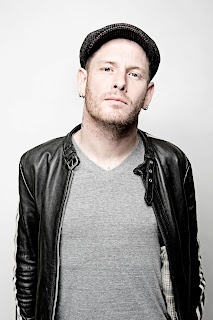
Taylor can already claim the distinction of being a New York Times Bestselling Author with his first book, ‘Seven Deadly Sins.’ Continuing Taylor’s success in print, ‘A Funny Thing Happened on the Way to Heaven’ was released on July 16, containing not only a number of fascinating non-fiction ghost stories, but also in-depth studies of religion, science and self.
For watching the interview click here

giovedì 25 luglio 2013
Scar The Martyr's Self-Titled Debut Coming 10/1
Scar The Martyr have revealed their full line-up in anticipation of their upcoming North American tour. The band's hugely awaited self-titled debut is set to arrive everywhere October 1. Scar The Martyr, which is headed by drummer and Slipknotmember Joey Jordison, have announced that the band’s full lineup will also feature lead vocalist Henry Derek, guitarists Jed Simon and Kris Norris, keyboardist Joey Blush, and bassist Kyle Konkiel. The band is set join Danzig, on their upcoming 25th Anniversary Tour, which will also include performances byDoyle from The Misfits, and Huntress. The North American trek kicks off August 9 at Sound Academy in Toronto, ON and wraps up on August 31 at Tempe, Arizona’s Marquee Theatre.
Furthermore, Scar The Martyr will be shooting a music video to accompany the album’s lead single, which will be announced in the coming weeks, along with a full album track listing.


Iscriviti a:
Post (Atom)